Earthy rooms with a story to tell.
Afrohemian decor blends African textiles and handcrafted texture with the relaxed soul of boho: mudcloth patterns, rattan and cane, woven baskets, carved wood and warm earth tones. This is the home of the @afrohemianstyle Pinterest channel — start with the free starter kit, steal a palette, then shop the rooms you fell for.
Get the free starter kit Follow on Pinterest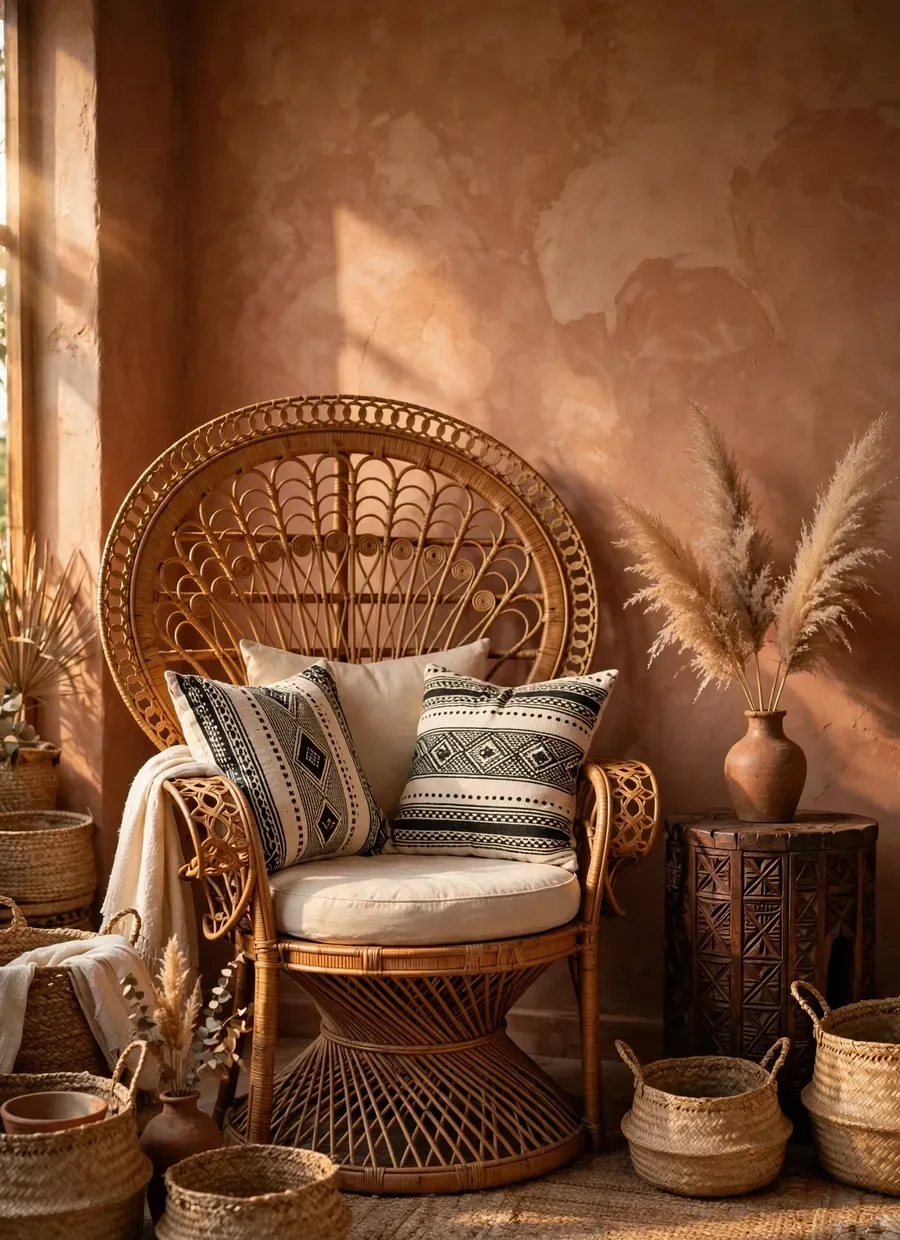
What is Afrohemian style?
Afrohemian (African + bohemian) is what happens when the structure of African craft meets the ease of boho living. It is not about filling a room with "ethnic" props — it is a short list of honest materials and patterns, layered calmly. Five elements do almost all of the work:
1. An earth-first palette
Terracotta, clay, ochre, sand and espresso do the heavy lifting. Walls and big pieces stay in this family, so everything you add later automatically belongs.
2. Mudcloth & bogolan patterns
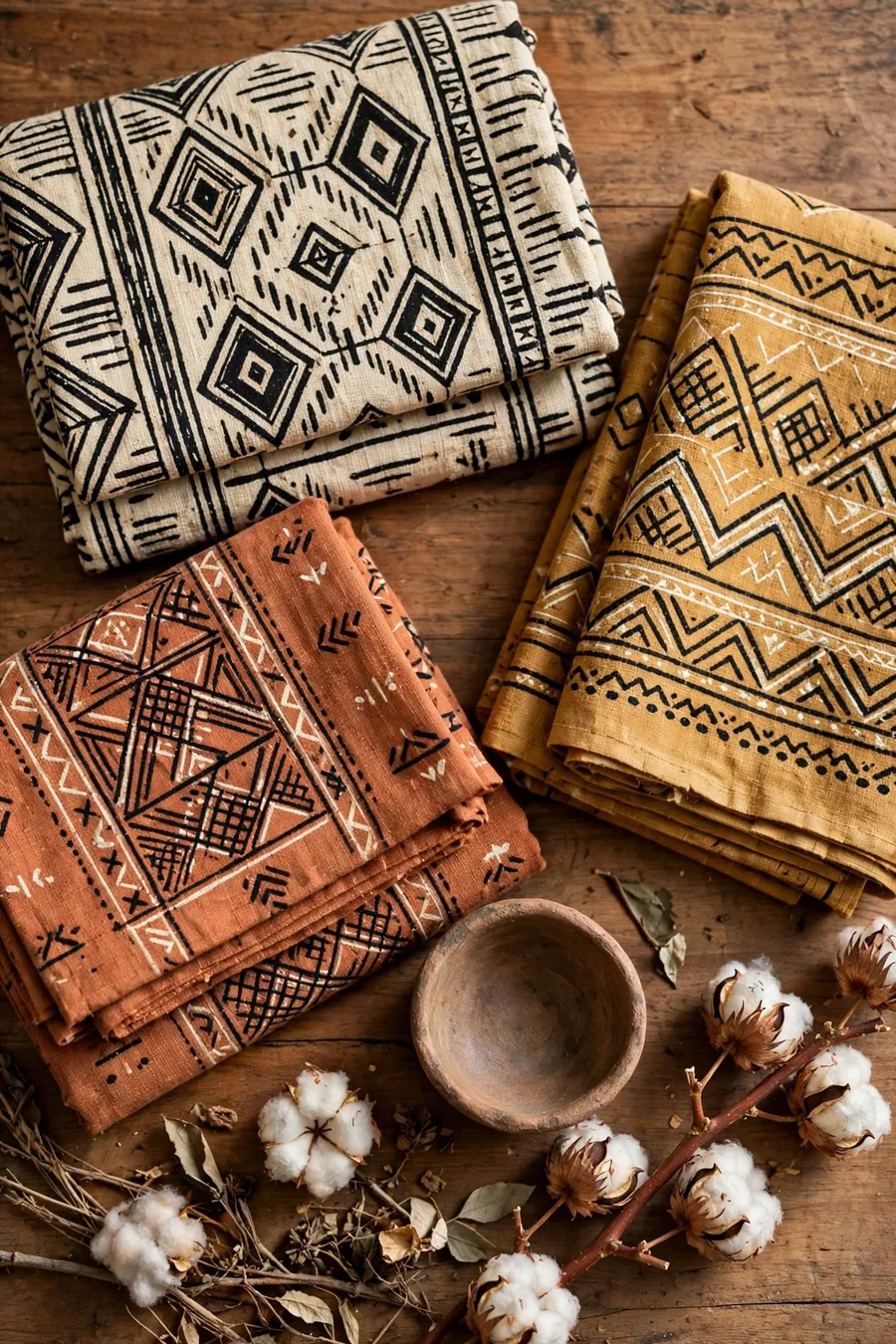
Black-and-cream geometric cloth from Mali is the style's signature print. One mudcloth pillow or throw gives a plain sofa instant identity — no other pattern purchase required.
3. Woven everything
Seagrass baskets, rattan, cane webbing and jute bring the hand-made texture that flat, factory-made rooms lack. Baskets double as storage, so the look stays practical.
4. Carved wood & clay
A carved side table, a rough clay vase, a wooden bowl. Pieces that show the maker's hand anchor the room and keep it from feeling like a showroom.
5. Layered textiles
Throws over chair arms, cushions in odd numbers, a flat-weave rug over jute. Layers are added one at a time and edited ruthlessly — cosy, never cluttered.
Where to start
Pick one room corner, one palette from below and the 7-piece checklist. Small and finished beats big and half-done — you can grow the room piece by piece from there.
The free 7-piece Afrohemian starter kit
The exact checklist we use to start a room from zero — seven pieces, in buying order, with the budget call for each one:
- One mudcloth (or mudcloth-look) textile — pillow cover or throw
- Two woven baskets — one large floor basket, one small catch-all
- One rattan or cane piece — chair, lamp shade or side table
- One clay or terracotta vessel — vase or planter
- One warm textile layer — woven throw in clay or ochre
- One piece of wall texture — basket wall, woven hanging or framed print
- One living green — a plant in a woven or clay pot
Tell us where to send it and the full kit (with palettes and styling notes) lands in your inbox:
3 earthy palettes that never miss
Every Afrohemian room on our channel is built on one of these three. Copy the ratios, not just the colors: roughly 60% base, 30% support, 10% accent.
Terracotta & Cream
#C67B5C · #F5EFE3 · #3E2F23 · #1E1A16
The classic. Warm terracotta leads, cream keeps it light, espresso and mudcloth black draw the lines. Best for living rooms and entryways.
Ochre & Espresso
#D9A441 · #3E2F23 · #A65A3E · #F5EFE3
Deeper and moodier. Golden ochre glows against dark wood — the palette to pick for bedrooms and reading corners that should feel like dusk.
Clay, Sage & Sand
#A65A3E · #9AA578 · #E8DCC4 · #3E2F23
The soft one. Clay warms it, muted sage cools it, sand keeps it breathable. Ideal for small rooms and rentals that cannot take dark walls.
Shop the look
 Seasonal favorite
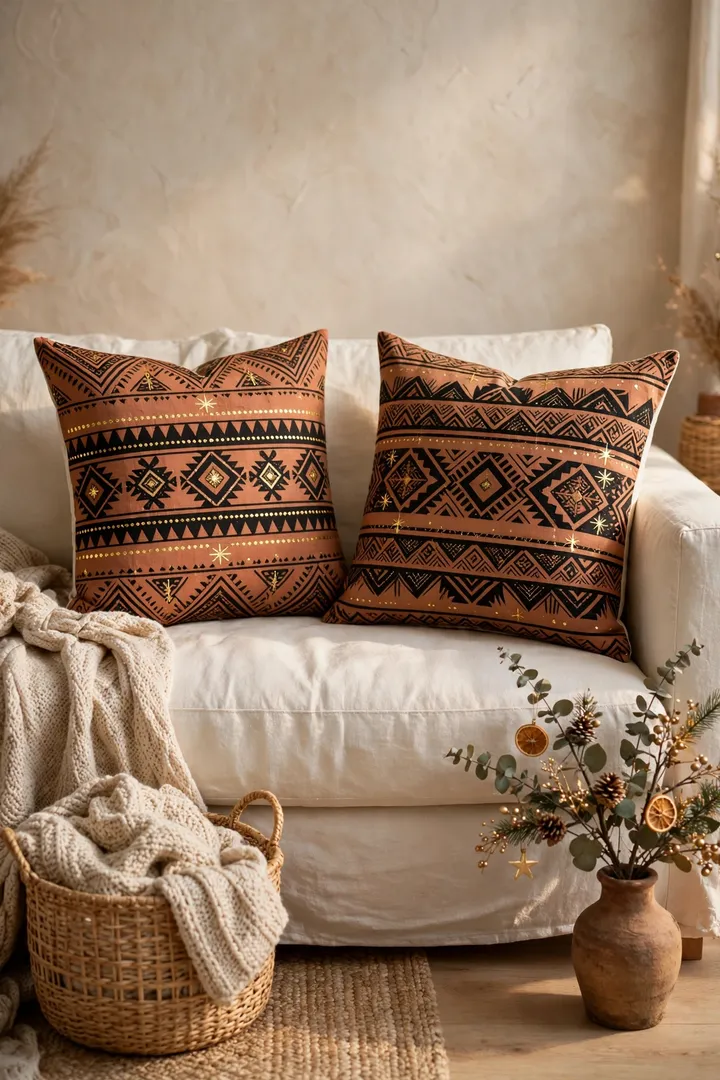
Afrohemian Christmas Pillow Covers
The fastest holiday upgrade we know: swap two pillow covers for terracotta tribal prints and the whole sofa turns festive without a single plastic ornament. Faux linen, so they fold away flat in January.
View on Amazon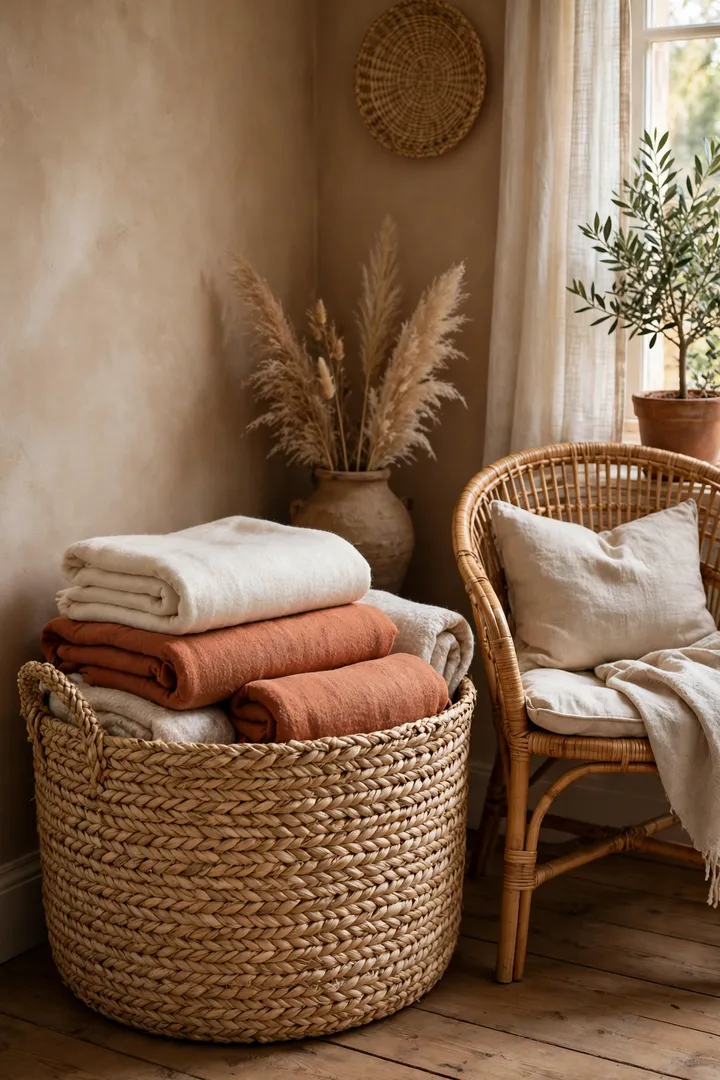 Storage that decorates
Woven Blanket Storage Basket
Every Afrohemian room needs one big basket doing quiet work: throws, cushions, the knitting project. This one's weave is tight enough to hold its shape even half empty — park it beside the sofa.
View on Amazon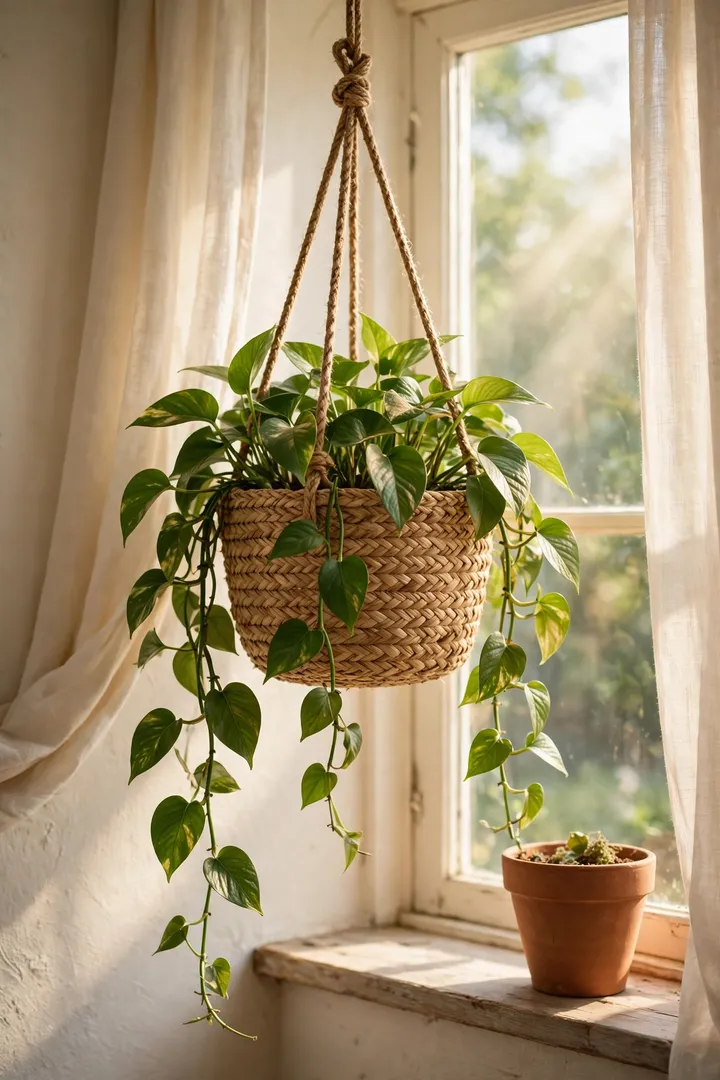 For plant people
Hanging Seagrass Basket
Woven texture at eye level changes a room more than another floor plant. Hang it by the window with a trailing pothos and the corner instantly reads hand-made, not store-bought.
View on Amazon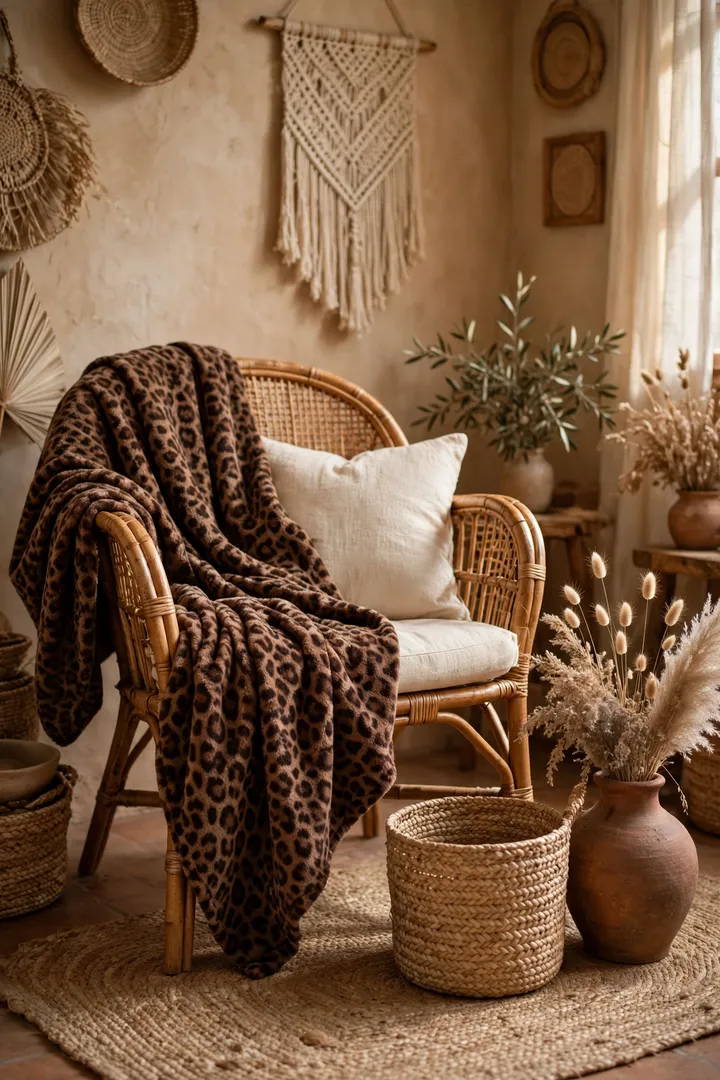 The wild card
Leopard Print Throw Blanket
Animal print is the Afrohemian wild card — in chocolate tones it behaves like a neutral. Drape it over rattan or a plain armchair and the whole palette warms up a degree.
View on Amazon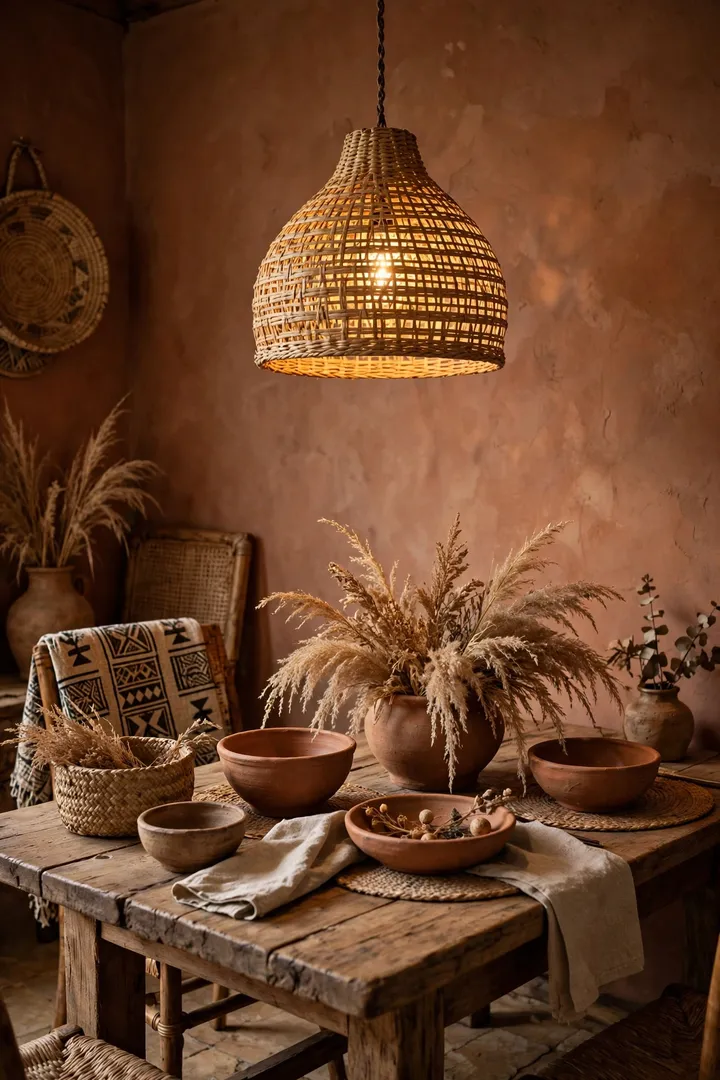 Statement lighting
Woven Pendant Light
One woven pendant over the dining table does what five small accessories cannot: it declares the style from the doorway. The weave throws patterned light after dark — free wall art, every evening.
View on AmazonGuides
The longer reads behind the pins — how the rooms actually come together.
Afrohemian 101: start with cloth, not furniture
Most people start a room restyle by shopping for furniture. Afrohemian rooms start smaller — with cloth. A single length of mudcloth (bogolan, the mud-dyed cotton of Mali) carries the whole style in its pattern: hand-drawn lines, dots and diamonds in black on undyed cream. Drape it over a sofa back or fold it at the foot of a bed and you have set the room's key before spending on anything big.
From there, work outward in the order your eye travels. First the large soft surfaces: a jute or flat-weave rug underfoot, cushions mixing one mudcloth print with plain linen in clay or sand. Then the woven layer — baskets and rattan — which supplies texture at floor and eye level. Only then add the hard pieces: a carved stool, a clay vessel, a wooden bowl. If a piece is smooth, shiny and factory-perfect, it has to earn its place against all that hand-made texture.
The two-print rule
Beginners drown rooms in pattern. Keep it to two: one geometric (mudcloth or a woven stripe) and one organic (animal print, or a botanical in earth tones). Everything else stays solid. When a room feels "too much", it is almost never the colors — it is a third print that snuck in.
Editing is the skill
Style the corner, then remove one thing. Afrohemian warmth comes from layered natural materials, not from quantity. The rooms that photograph best on our channel are consistently the ones where a basket sits half empty and a wall has breathing space around a single hanging.
The bedroom retreat: layering textiles the Afrohemian way
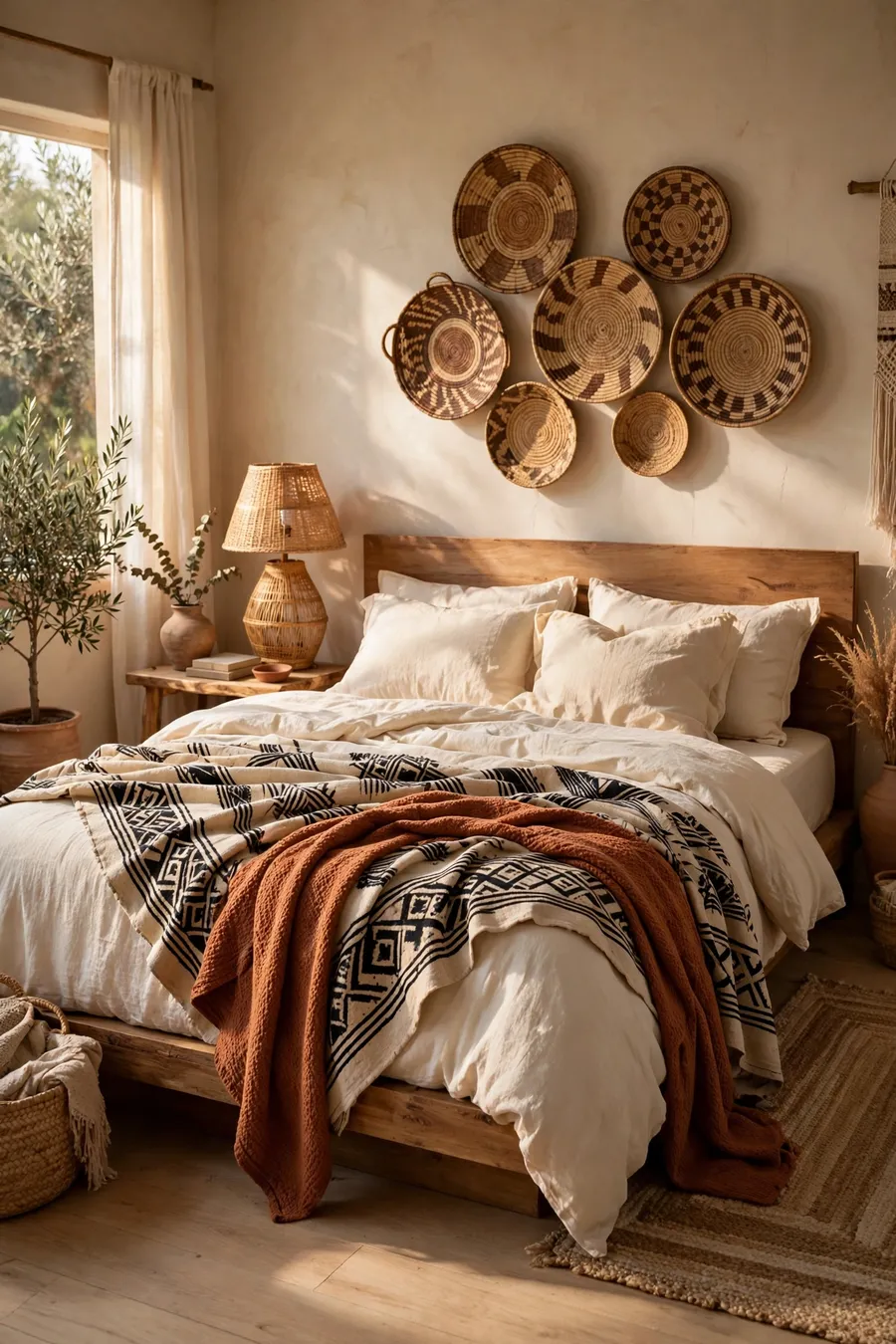
The Afrohemian bedroom is a layering exercise, and the bed is the whole project. Start with the calmest base you own — cream or sand linen, no pattern. Add warmth in the middle layer: a clay or terracotta throw folded across the lower third of the bed. Finish with the story layer: one mudcloth cushion or a folded bogolan strip at the pillows. Three layers, three jobs: calm, warmth, identity.
Above the bed, woven wall baskets do the work of art at a fraction of the weight — important if you rent. Group three to five in a loose arc, largest in the middle. Their shadows move with the light, so the wall never looks flat. Beside the bed, choose woven light: a rattan or basket-weave lamp shade turns harsh bulbs into the dusk glow this palette was made for.
What to skip
Matching bedroom sets, cool white bulbs and grey anything. Grey is the one color family that fights every palette on this page — if your bedding is grey, it is the first thing to replace, and a single cream duvet cover fixes it in one purchase.
The five-minute version
Short on time or budget? Cream bedding, one terracotta throw, one mudcloth cushion. That is the whole formula — the room in our most-saved bedroom pin is barely more than that.
Small spaces & rentals: Afrohemian without renovating
Everything that makes this style work is portable, which makes it the friendliest style there is for renters and small rooms. Nothing here needs paint, nails in brick or a landlord's permission.
Go vertical with weave. Hanging baskets and a woven wall hanging give you the texture of a full restyle in the space above furniture — the square footage you actually have spare. Let baskets be the furniture. A large lidded basket is a side table, a laundry hamper and a sculpture in rotation; in a small room, pieces that change jobs beat pieces that sit still. Use the Ochre & Espresso palette in layers, not on walls. Dark tones on textiles read as depth without shrinking the room the way dark paint would — and they leave with you when you move.
The one trap: scale. Small rooms tempt people into many tiny accessories, which reads as clutter at exactly the size where clutter hurts most. Buy fewer, bigger woven pieces — one generous floor basket anchors better than six small ones.
3 mistakes that flatten an Afrohemian room
1. Treating it as a theme. A mask, a drum and a "safari" print from a party shop is costume, not style. The real thing is materials: cloth, weave, wood, clay.
2. All pattern, no plain. Mudcloth needs quiet neighbors. If every surface shouts, nothing reads — keep at least half the textiles solid.
3. Cold light. Blue-white bulbs bleach terracotta into pink plastic. Warm bulbs (2700K) are the cheapest Afrohemian upgrade in existence — swap them before buying anything else.